
DEEP FLAW AI]mix – world’s first AI generated sculpture

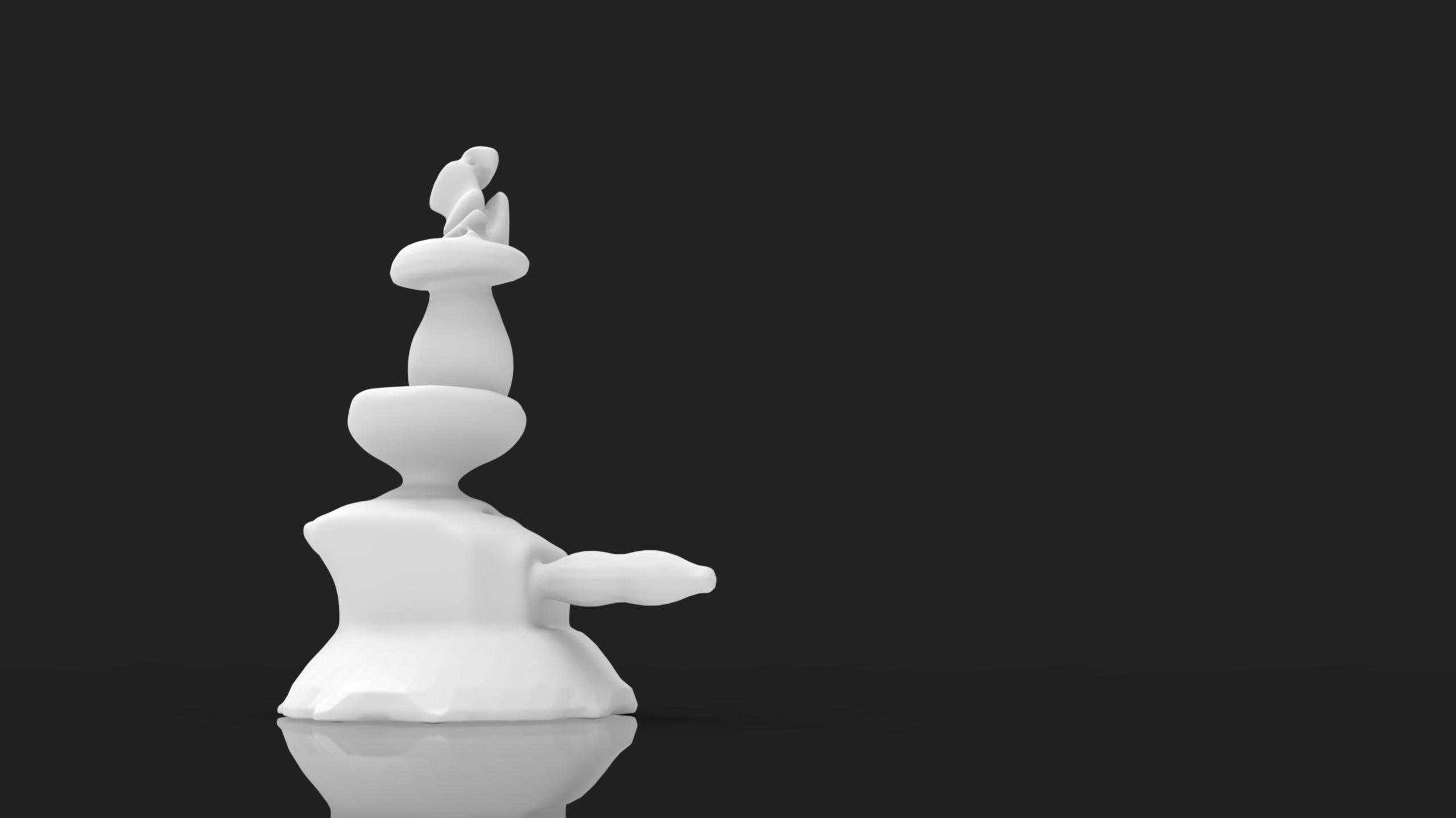
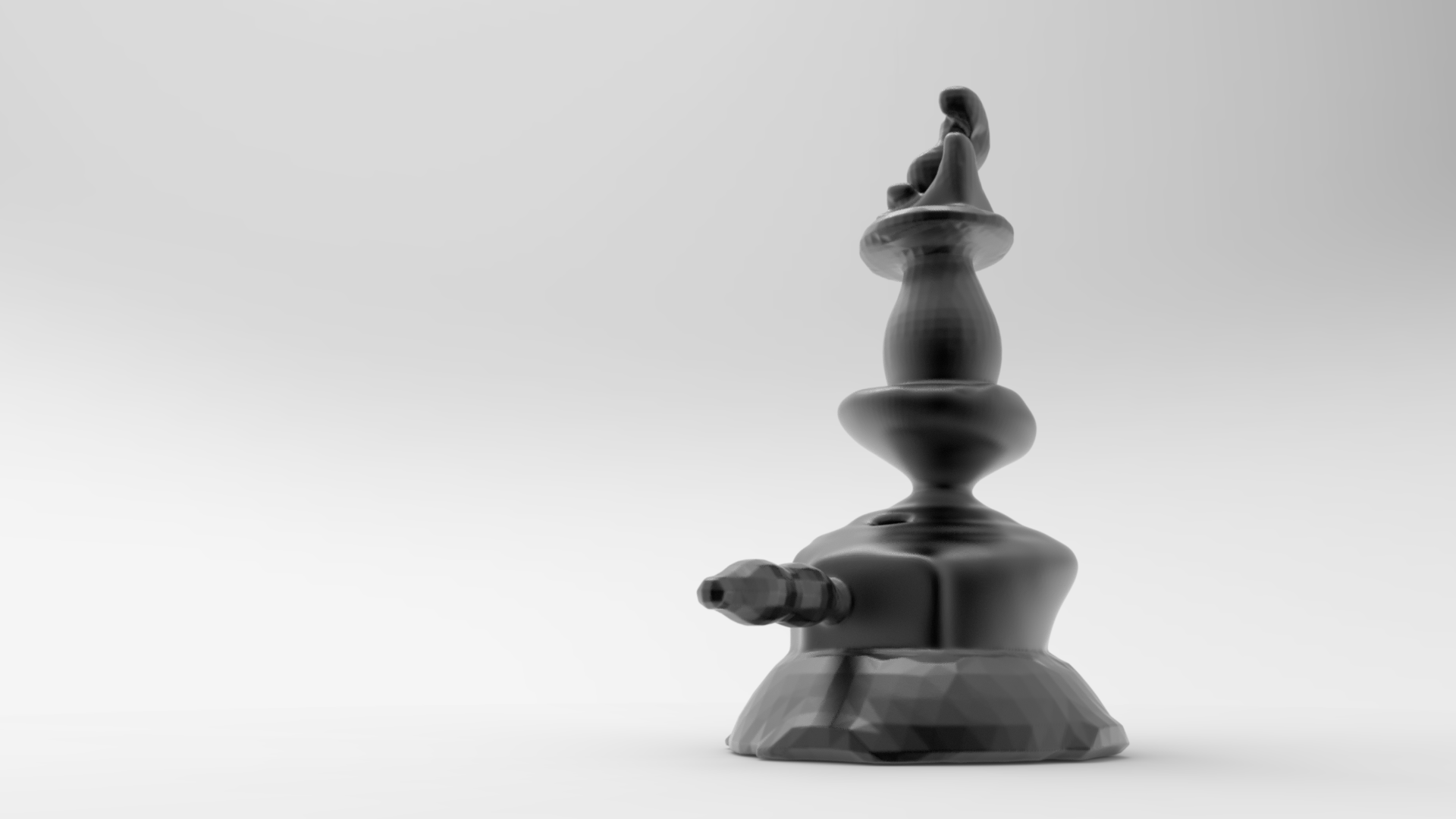
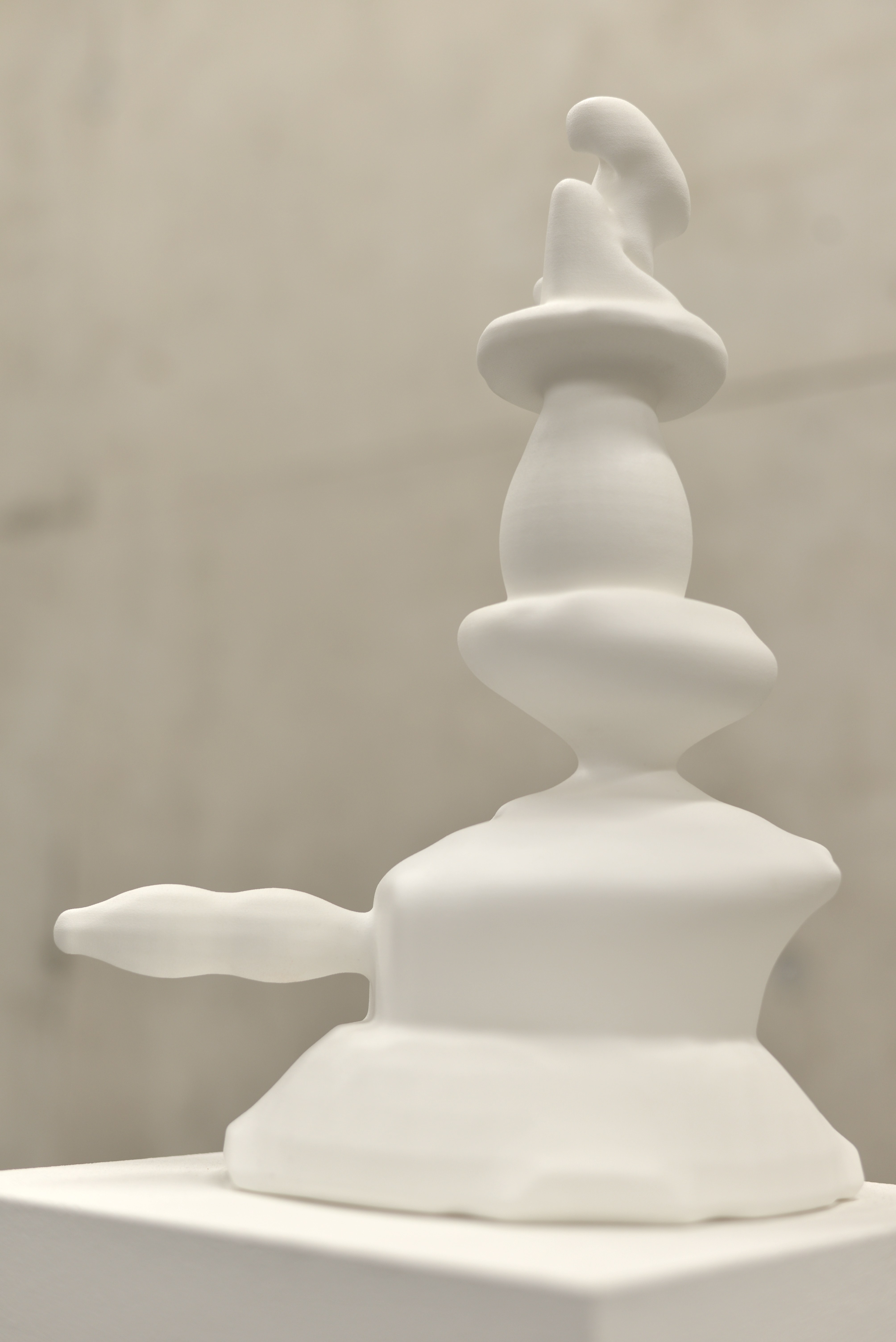
DEEP FLAW – AI]mix – “Perfume bottle, Mushroom, Dish, Patatas, Mickey Morph.” (2016)

Deep Flaw is a collaboration with the Center for Computer Games Research IT University of Copenhagen and the Department of Computer Science University of Wyoming Laramie with artist Frederik De Wilde. Deep Flaw is a series of, world’s first, AI generated and evolutionary driven, 3D artworks by combining evolutionary algorithms and AI to generate 3D models and 3D prints.

IntroThe Readymade 

Marcel Duchamp’s readymades remain one of the most provocative legacies of twentieth-century art. By taking ordinary manufactured objects and, through selection and re-contextualization, presenting them as art, Duchamp changed what an artwork could be: it became less about skilled making and more about a decision, a gesture, and the institutions that recognize it. Bicycle Wheel (first assembled in 1913) captures this shift perfectly. Mounting a spinning wheel on a stool turned a familiar object into something that questions our assumptions about making, looking, and meaning.

The Post-Readymade

Fast forward to the twenty-first century and we find a related but transformed question: what happens when the act of selection is distributed across code, data, and algorithms? Frederik De Wilde’s DEEP FLAW (2016) gives a clear and compelling example. Built with collaborators at the IT University of Copenhagen and the University of Wyoming, the project uses evolutionary computation together with deep neural networks to generate three-dimensional models from as few as eight photographic “snapshots.” The resulting 3D prints are curious: a neural classifier will still label an evolved form as a piggybank or as Mickey Mouse, while human viewers experience those same objects as oddly distorted, even grotesque. The work exposes a productive mismatch between machine recognition and human perception.

The technical backbone of such projects helps explain their aesthetic power. Evolutionary algorithms can explore wildly discontinuous shapes because they do not depend on smooth, differentiable loss functions. Paired with deep networks trained for classification, these algorithms are scored by learned representations and pushed toward outputs that straddle familiarity and novelty. In other words, the system’s “knowledge” of categories stays intact even as evolutionary search produces forms that fall outside human expectations—hence the “flaw” in DEEP FLAW: an object that is both recognizable to a machine and alien to us.

Viewed historically, the comparison to Duchamp is illuminating. Duchamp’s gesture—the readymade—relied on human intentionality: the artist chose and named an object, and that choice did the conceptual work. Today, the artist’s role often shifts to designing procedures, curating datasets, and setting parameters. The algorithm then carries out variations and selections, sometimes producing forms the human creator did not foresee. Authorship and agency become distributed between human and machine.

This shift brings practical and ethical questions into sharper focus. Duchamp’s readymade questioned the museum and the market; algorithmic art forces us to question the infrastructures that make machine perception possible: the datasets, platform economies, and research cultures that train classifiers. When a generated form echoes a copyrighted character, for instance, the issue is not just legal but epistemic—what does it mean that statistical patterning can stand in for intentional representation?

Perhaps the most important contribution of juxtaposing Duchamp with projects like DEEP FLAW is a renewed attention to recognition itself. Duchamp taught us that context and naming shape what we call art. Algorithmic practices teach us that the architectures of classification—data, labels, networks—also shape what is visible and legible. That insight suggests a middle path beyond simple techno-celebration or alarm: a historically grounded critique that looks at the formal qualities of algorithmic objects and the political-economic systems that produce them.

In short, Duchamp’s readymades and contemporary machine-learning works are not identical gestures, but they are cousins. Both force us to reconsider where meaning comes from—whether it is the artist’s single act of designation or the distributed decisions embedded in code, datasets and latent spaces. To write an art history of the algorithm, we need to attend equally to the aesthetic particularities of generated objects and to the social infrastructures that make machine perception possible. Only by holding those two concerns together can we understand both the continuities with modernist critique and the new challenges that algorithmic practices raise.


Credits

Deep Flaw is a project by Frederik De Wilde in an ongoing collaboration with Joel Lehman, Jeff Clune and Alexander Holdt. De Wilde already collaborated with Jeff Clune and Anh Nguyen on “The Innovation Engine.” Code for Creative Generation of 3D Objects with Deep Learning and Innovation Engines. “Creative Generation of 3D Objects with Deep Learning and Innovation Engines.”http://joellehman.com/lehman_iccc2016.pdf